
I’m singin’ in the rain, what a glorious feelin’ I’m ha-ha-happy again. Yes finally some decent rain….not yet enough, but it was gratefully received and it was mostly good steady stuff, so I won’t quibble about the couple of occasions when it hammered down rather more violently than was ideal. The soil will be resting contentedly this morning, feeling slightly bloated, like how you feel after a large Sunday lunch….including pudding, when you just want to flop into an armchair and semi-doze. However, there’s no time for that because the washing up needs doing, or in my case plants need planting into the moist soil.
That will have to wait until tomorrow though, because I have more honey to extract today. Well that’s the plan as I write these words at 8.00am. I need to check that the bees have vacated the boxes of full combs via the one-way bee escapes that I put on the hives. They generally work pretty well, but I have known occasions when one of them has got stuck open wide enough for the bees to get back in to access the fruits of their labours, making the removal of the boxes of combs (supers) tricky. Time will tell.
On Wednesday I attended a farm visit organised by the Soil Association, though the farm that hosted the event is not actually organic, but has adopted some interesting techniques to reduce its use of chemical pest control. Boxford Fruit Farms is based in Leavenheath (Between Sudbury and Colchester) and is a large scale grower of apples, cherries, strawberries, raspberries, blueberries and asparagus, mostly of which go to supermarket customers. With the very exacting quality standards imposed upon them they have to optimise their output if they have any chance of making any profit, so they must ensure that their growing practices result in the highest levels of fruit that meet the (unreasonable) specifications of the buyers. This means that the fruit has to be a certain size, a certain colour and without blemishes or damage from pests or disease. Of course blemished fruit can be juiced, but that is far less profitable than fresh fruit sales.
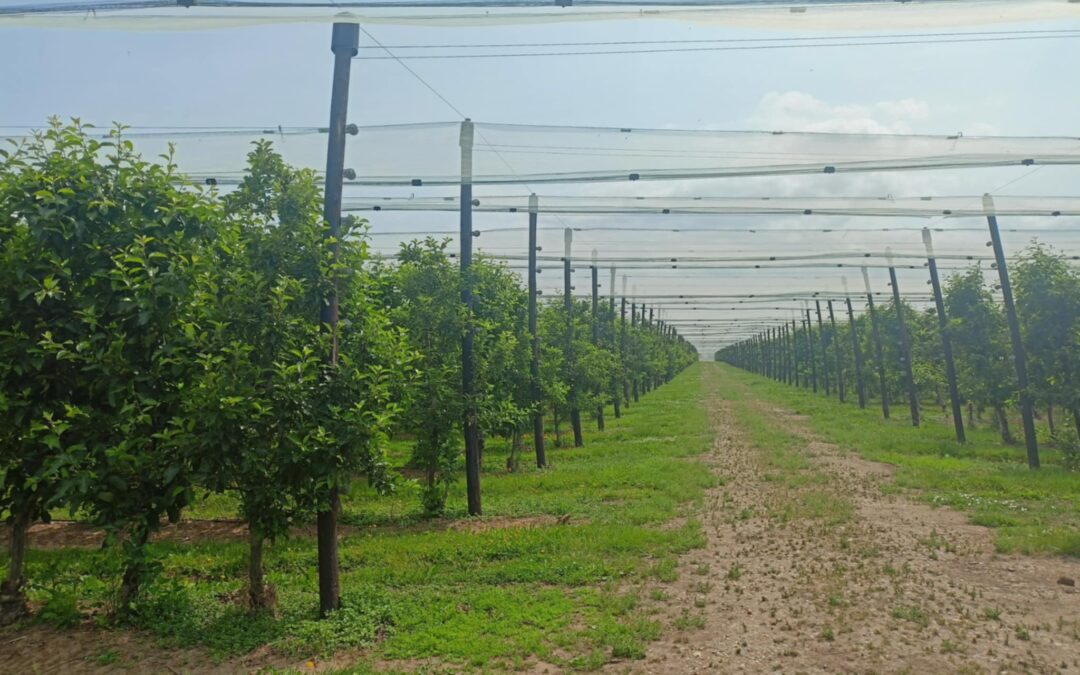
The first line of defence is netting. All of the orchards are protected by mesh netting, both top and sides – huge fruit cages. The cover over the apples is to prevent hail damage – one hail event at this time of the season could ruin the entire crop. It also helps to keep birds out and provides a level of frost protection at blossom time. There are weather stations regularly positioned throughout the orchards which feed back real time data for analysis, there are pheromone traps for monitoring the presence of codling moth, the latest of which are wirelessly linked to computers that will alert staff when the population of these damaging insects reaches a threshold at which intervention is required. There are ‘bug hotels’ made from bundles of bamboo canes hanging from posts at regular intervals for housing beneficial insects, and wildflower mixes in the alleys between the trees for attracting the same. There are financial and practical reasons for going down this road, the cost of chemicals to control pests and diseases are extremely expensive, which hurts the bottom line, but also many of those chemicals have been outlawed in recent years and are no longer available, so alternative solutions are required.
They also use technology to reduce the levels of soil amendments that they apply to the orchards by using aerial drones to create nutrient maps, so that fertilisers are applied only where they are needed. During the farm tour a drone buzzed overhead on a pre-programmed flight path taking images of the apple trees through the hail netting using a camera with definition great enough to guide the farm manger over which trees need to have the fruit thinned. Meanwhile in the cherry orchards, as well as the insect/bird netting there are also automatic rain screens that cover the crops during the period when the fruit is ripening to avoid blemishes from precipitation and to reduce the incidence of fungal disease and fruit rot. It is an amazing operation and a fascinating visit, there is so much more that I could tell you about, but you are not nerds like I am when it comes to this type of thing. It is light years away from my type of growing, but still there were things that I saw there that can be adopted on my little patch of land.
After the rain at least the thistles will pull out more easily, and the ground is ready to receive the dozens of winter squash plants that are now ready to set out. With targeted watering I managed to finally get some bean poles in the ground, so the bean plants will also go in tomorrow – long overdue. The garlic is now ready to lift and will be laid out under cover to dry. I noticed the first couple of tomatoes starting to have a hint of colour about them yesterday, a very welcome sight. Yesterday afternoon I blocked three holes in the fence where muntjac and rabbits have been entering – my hands are still tingling from the nettle stings that I suffered while darning the fence. My nocturnal visitors have taken the tops off all of the Florence fennel and have made a mess of the chard, so after the horse has bolted I will have to cover the bed with netting if I am to salvage anything from either.
The pointed cabbages are still looking good, as is the cavolo nero. There are lettuces again, courgettes from the polytunnel, and I will be digging the Maris Bard first early potatoes this week – a proper taste of early summer. There are aubergines, celery, cucumbers, mushrooms, mini tomatoes, carrots and onions. Spartan apples, oranges, lemons and avocados are your fruit choices.
Right, I’ve got lots to do so I’m going to crack on. Have a good week, they are forecasting 27° by Friday!
Bye for now
Phil